Fair Value Gaps Explained: A Gold Trader's Complete Guide to FVG Trading
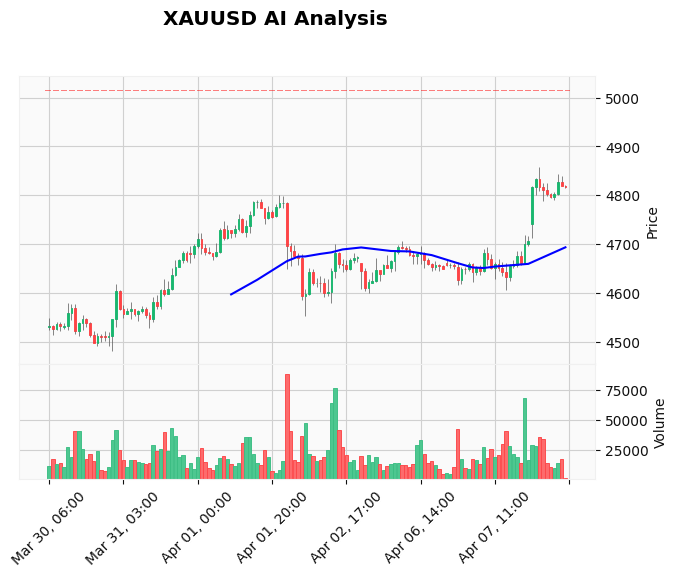
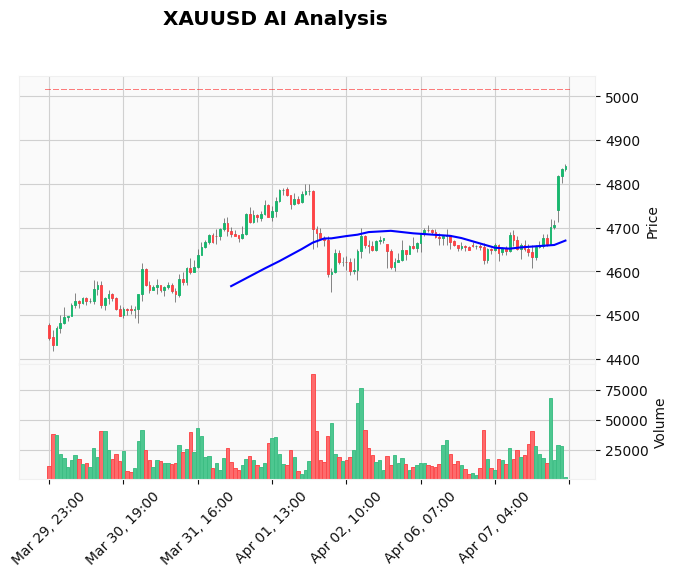
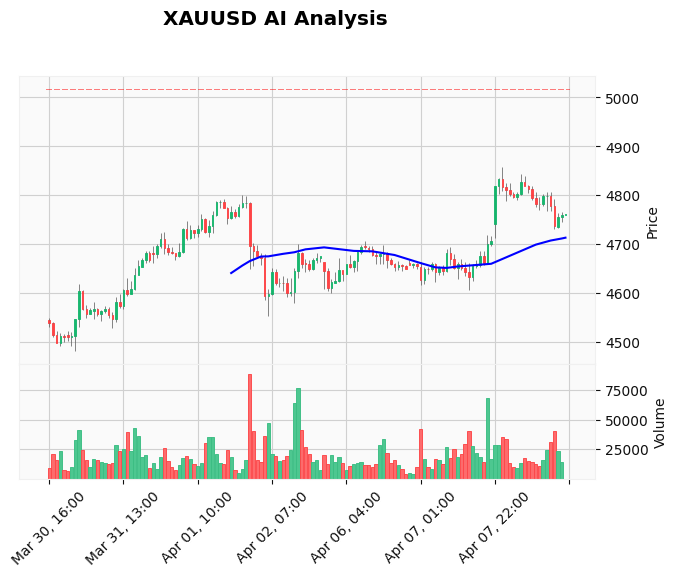
You see Gold make a violent $30 move in minutes, leaving a blank space on the chart. Hours later, the price drifts back to that exact zone, hesitates, and then reverses sharply. That's not random; it's a Fair Value Gap (FVG) in action—a magnet for price. For XAU/USD traders, mastering FVGs is like seeing the hidden scaffolding of the market, revealing where professional liquidity and institutional orders are likely waiting. This guide will break down this core Smart Money Concept (SMC) into simple, actionable steps you can apply directly to your Gold charts. If you're tired of guessing where price might reverse and want a structured method, you're in the right place. For traders who want this logic applied 24/7, our AI Trading Bot is programmed to identify and act on these precise market inefficiencies in real-time.
What Is a Fair Value Gap (FVG)?
A Fair Value Gap (FVG) is a three-candle pattern that creates an imbalance or inefficiency in price. Visually, it's a gap or “blank space” left on the chart when market movement is so rapid that it skips over certain price levels. Think of it this way: price moved from point A to point C so fast that it never actually traded at point B. The market considers this skipped area as “unfair” value, and price has a very high probability of returning to “fill” or “mitigate” that gap before continuing its journey. In Gold trading, these gaps frequently appear around major economic news like FOMC decisions or Non-Farm Payrolls, where buy or sell orders are executed in massive volume, creating instant momentum.
Why Fair Value Gaps Matter for XAU/USD Traders
Gold is a uniquely sentiment-driven asset, prone to sharp, news-fueled spikes and drops. This volatility is a factory for FVGs. Unlike a currency pair that might trend smoothly, XAU/USD often moves in impulsive bursts, leaving clear inefficiencies behind. These gaps become critical future price magnets. For a trader, an FVG acts as a high-probability support or resistance zone. A bullish FVG (created by a sharp upward move) becomes a potential buy zone on a retracement. A bearish FVG (created by a sharp drop) becomes a potential sell zone on a pullback. Trading these zones aligns you with the market's natural tendency to seek equilibrium, offering clear entry points, stop-loss levels, and profit targets. It provides a rules-based answer to the constant question: “Where do I enter?”
How to Identify and Trade Fair Value Gaps: A Step-by-Step Guide
Follow this concrete process to find and act on FVGs in your MT4, MT5, or TradingView platform.
Step 1: Identify the Three-Candle Sequence. Look for a strong, impulsive candle. The candle after this impulsive candle must open and trade in the same direction, but its high and low must not overlap with the high and low of the candle before the impulsive move. This non-overlapping area is the Fair Value Gap. For a Bullish FVG: Candle 1 is down, Candle 2 is a strong up impulse, Candle 3 is up and its low is above Candle 1's high. The gap is between Candle 1's high and Candle 3's low.
Step 2: Draw the FVG Zone on Your Chart. Do not mark it as a single line. Highlight the entire area between the relevant wicks. For a Bullish FVG, draw a rectangle from the high of Candle 1 to the low of Candle 3. This zone is your potential demand area.
Step 3: Wait for Price to Retrace and Enter the Zone. Patience is key. Do not chase the initial move. Wait for price to pull back and enter your drawn FVG zone. The “sweet spot” for entry is often the 50-75% retracement level of the FVG.
Step 4: Confirm with Additional Context. An FVG alone is powerful, but its success rate skyrockets when combined with other SMC tools. Look for the FVG to align with a previous Order Block (the consolidation candle before the impulsive move) or a key Support/Resistance level. Also, check if the FVG is filling in line with the broader market structure (e.g., a Bullish FVG in an overall uptrend). Tools like our Price Action Pro EA are built to scan for these high-probability convergences automatically.
Step 5: Define Your Trade Management. Place your Stop Loss (SL) just below the entire FVG zone for a buy, or above it for a sell. Your first Take Profit (TP) target is often the origin of the impulsive move that created the FVG. A conservative approach is to take partial profit here and let the rest run if market structure supports further continuation.
Common Mistakes Gold Traders Make with FVGs
Even with a great tool, execution errors can cost you. Here are the top pitfalls to avoid.
1. Trading Every Single FVG: Not all gaps are created equal. Small FVGs on lower timeframes (like the 1-minute or 5-minute chart) are noise. Focus on significant FVGs on the 15-minute, 1-hour, and 4-hour charts that coincide with key daily or weekly levels. The most potent FVGs are those created around London or New York session opens and major news events.
2. Entering at the Edge of the Zone: Jumping in as soon as price touches the very top of a Bullish FVG often leads to being stopped out if price drills through the entire zone. Be patient. Wait for price to trade into the heart of the FVG and show a reaction, like a bullish pin bar or a small consolidation.
3. Ignoring the Trend and Higher Timeframe Structure: Trying to buy a Bullish FVG in a strong, established daily downtrend is fighting the tide. FVGs work best when they serve as pullback entries in the direction of the dominant trend. Always zoom out to the daily chart to confirm the primary bias.
4. No Confirmation and Poor Risk Management: An FVG is a zone of interest, not a guaranteed reversal signal. Failing to use a confirming candle or indicator (like RSI divergence) and not placing a logical stop loss turns a high-probability setup into a gamble. Never risk more than 1-2% of your account on any single FVG trade.
Real Example: Trading an FVG on a XAUUSD Chart
Imagine a scenario following a hotter-than-expected US CPI print. Gold (XAU/USD) sells off impulsively from $2,340 to $2,315 in one large hourly candle. The next candle continues down but opens lower, creating a clear Bearish FVG between $2,325 (the low of the candle before the impulse) and $2,320 (the high of the candle after the impulse). This $2,320-$2,325 zone is now a potential future supply area.
Over the next several hours, as the initial panic subsides, Gold retraces higher. It approaches the $2,322 area (the middle of the FVG), forms a bearish rejection candle (like an evening star or bearish engulfing), and stalls. This is your signal. A short entry at $2,322 with a stop loss above $2,327 (above the FVG) and a take profit target back down near the $2,315 swing low offers a clear, structured trade. For traders who can't watch charts all day for these setups, an automated News Trading Bot can be configured to capitalize on exactly these post-volatility inefficiencies.
Frequently Asked Questions (FAQ)
Q: What's the difference between a Fair Value Gap and a regular gap on a chart?
A: A regular gap (like a weekend gap) is simply a blank space between two candles' closes and opens. An FVG is a specific three-candle pattern defined by the non-overlap of wicks, signifying a true imbalance in buying/selling pressure. All FVGs are gaps, but not all gaps are valid FVGs.
Q: What is the best time frame to use Fair Value Gaps for Gold trading?
A. Start with the 1-hour and 4-hour charts for identifying primary FVGs that institutional traders watch. You can use the 15-minute chart to fine-tune your entry within a larger FVG zone. Avoid the 1-minute and 5-minute charts for your primary analysis, as they are filled with market noise.
Q: How do I place my stop loss when trading an FVG?
A. Your stop loss must be placed beyond the opposite boundary of the FVG zone. If buying in a Bullish FVG zone, place your stop loss slightly below the bottom of the zone (below the high of Candle 1). This ensures you are wrong if the market fully fills and trades through the entire imbalance.
Q: Do all Fair Value Gaps eventually get filled?
A. While the probability is high, not every FVG gets filled immediately. Some gaps in very strong, trending markets may be skipped and filled much later. The key is to only trade FVGs that are being approached by price in your current trading session and that have additional confirmation from market structure.
Q: Can I use FVGs with other indicators?
A. Absolutely. Combining FVGs with the 20 and 50-period Exponential Moving Averages (EMAs) for dynamic support/resistance, or with RSI to spot divergences at the FVG zone, can create extremely high-conviction setups. Running this analysis on a dedicated low-latency Windows VPS ensures you never miss a reaction due to platform lag.
Conclusion
Fair Value Gaps transform chaotic Gold price action into a map of opportunity. By learning to identify these inefficiency zones, you stop chasing price and start letting it come to you. Remember the core sequence: identify the three-candle pattern, mark the zone, wait patiently for the retracement, seek confirmation from trend and order blocks, and then execute with disciplined risk management. This methodology provides the structure needed to navigate XAU/USD's volatility with confidence. The ultimate goal is to make this process second nature. To see this powerful logic executed with machine precision, explore our best-selling AI Trading Bot, which scans for and trades these high-probability FVG setups around the clock, turning market structure into consistent opportunity.
Trading Gold (XAU/USD) involves significant risk of loss. This content is for informational purposes only and does not constitute financial advice. Always conduct your own research and trade responsibly.