The Future of AI Trading: Navigating the 2026 Landscape of Algorithmic & Crypto Mastery
The global financial ecosystem of 2026 has transitioned into a rare period of synchronized growth, driven by the delayed impact of monetary easing and a robust rebound in global manufacturing. Within this macro environment, artificial intelligence has moved beyond being a speculative novelty to becoming the core operating system of modern finance. For professional traders and institutional desks, 2026 is the year that AI has truly started to power how clients and trading venues interact, shifting the competitive edge from raw data access to the mastery of contextual, personalized, and decision-ready insights. This report examines the intricate convergence of algorithmic precision and crypto-market volatility, providing a strategic roadmap for navigating a landscape where autonomous agents, alternative data, and sophisticated machine learning models dictate the flow of global capital.
The Macroeconomic Foundation of AI Integration in 2026
The integration of AI into trading workflows is no longer limited to high-frequency trading (HFT) firms or quant-heavy hedge funds. By 2026, buy-side trading desks have moved from experimental pilots to fully embedding AI across the entire investment lifecycle, encompassing research, portfolio construction, execution, and compliance. This shift is characterized by a transition from "AI mentions" in corporate earnings to actual "AI monetization," where firms utilizing advanced machine learning for operations see cash-flow margin expansion outpacing the global average by a factor of two.
The Productivity Wildcard and Global Manufacturing
Artificial intelligence remains the productivity wildcard of 2026, fueling optimism across equity markets while simultaneously posing systemic risks related to excess capacity. The manufacturing sector's cyclical recovery has been accelerated by AI-driven supply chain optimization and predictive maintenance, creating a fertile environment for multi-asset trading strategies. However, the market is no longer paying for the mere presence of AI; instead, investors are punishing uncertainty and rewarding firms that demonstrate disciplined monetization of their technological stacks.
Geopolitics and the Fragmentation of Supply Chains
As the United States and China compete for dominance across the AI value chain—spanning semiconductors, compute power, and energy infrastructure—localization pressures have fragmented global supply chains. In 2026, the value of secure, domestic infrastructure has increased significantly, creating volatile trading opportunities in commodities and aerospace sectors. For traders, this means that fundamental analysis must now include an "AI macro overlay," accounting for tighter export controls and the rising cost of the electrical power required to sustain gargantuan data centers.
| Economic Driver 2026 | Strategic Trading Implication |
|---|---|
| Monetary Easing Impact | Synchronized global growth supports long-term equity momentum. |
| AI Capex Expansion | Debt financing for AI infrastructure creates opportunities in credit markets. |
| Geopolitical Fragmentation | Localization pressures raise costs and increase volatility in hardware sectors. |
| Labor Disruption | Returns increase for firms that redeploy workers into high-value AI-orchestration roles. |
The Keyword Wheel: Deciphering the 2026 Discovery Layer
The keyword wheel for 2026 identifies four critical sectors where AI is redefining the trading landscape: AI Models, Social Media Sentiment, Agentic Shopping Data, and the new Search Engine paradigm. Mastery of these sectors is essential for any trader looking to achieve consistent profitability in a market increasingly dominated by autonomous machines.
AI Models: From Static Logic to Adaptive Intelligence
The traditional paradigm of algorithmic trading, which relied on static, hard-coded logic, has been completely upended. In 2026, AI models function as new operating systems that independently access various tools to perform complex trading tasks. These models have evolved from one-dimensional applications into outcome-based assistants that can reprogram their own internal logic based on changing market regimes.
| Feature | Legacy Algorithmic Trading | AI Operating Systems (2026) |
|---|---|---|
| Logic Construction | Static "If-A-Then-B" scripts | Dynamic, outcome-based self-programming. |
| Memory Capacity | Limited historical backtesting | Large-context memory for bespoke responses. |
| Interoperability | Siloed data streams | Seamless integration with toolchains and APIs. |
| Goal Orientation | Rule-dependent | Agentic, multi-step goal planning. |
For those looking to capitalize on this shift, the(https://investortipster.com/marketplace/product/ai-trading/) represents the pinnacle of this technological evolution. Optimized specifically for Gold (XAUUSD), this bot utilizes a combination of technical and fundamental analysis alongside sophisticated web scraping to maintain an 83%+ winning rate in the 2026 landscape. Traders seeking a high-performance entry into automated markets should check out our best-selling AI Bot here to align their capital with the most advanced models available today.
Social Media: The Real-Time Sentiment Engine
In the high-velocity environment of 2026, social media has transformed from a communication platform into a massive, real-time dataset for sentiment-driven trading. AI systems now employ advanced Natural Language Processing (NLP) to read and interpret millions of text fragments across platforms like X (formerly Twitter), Reddit, and TikTok in milliseconds.
By analyzing subtle linguistic patterns that escape human analysts, AI can detect sudden shifts in market mood—fear, greed, or emerging hype—long before these sentiments are reflected in price action. For instance, noticing a spike in social media negativity regarding a specific stock allows AI-driven systems to exit positions early, significantly mitigating downside risk. The global market for AI in social media is estimated to reach $3.87 billion in 2026, with a significant portion of this growth driven by "social listening" tools that provide actionable insights for traders.
Shopping and Retail: Alternative Data as Alpha
The concept of "alpha" has shifted toward alternative data sources, specifically agentic shopping and retail patterns. By 2026, "agentic commerce" has hit in full force, where AI agents autonomously discover, compare, and purchase products for consumers. This creates a continuous stream of data known as "digital shelf signals," which capture real-time pricing, availability, and assortment gaps across global marketplaces.
For the institutional trader, this data is a goldmine. Retail data has moved from periodic snapshots to a continuous stream, allowing teams to see pricing shifts or promotional impacts in real-time. AI models process these large heterogeneous datasets—including consumer behavior and fulfillment data—to forecast market trends and consumer behavior changes with unprecedented accuracy. Companies that have successfully integrated AI across this value chain have reported a 30% increase in customer lifetime value and significantly better service levels.
Search Engines: The Evolution of Financial Discovery
The traditional search engine paradigm is dying. Gartner projects that traditional search volume will drop by 25% by the end of 2026 as users turn to AI chatbots and voice tools for financial advice. In this new era of "Answer Engine Optimization" (AEO), AI systems like ChatGPT, Gemini, and specialized finance agents are influencing where money moves by evaluating products and verifying advisor credibility before a user ever visits a website.
In 2026, trust is the new currency. AI models prioritize content that is data-backed, well-written, and authoritative. For trading platforms and financial institutions, being a "trusted answer" for an AI agent is the new goal. This shift has moved marketing priorities away from surface-level messaging toward the provision of machine-readable, verifiable data—such as licenses, credentials, and regulatory disclosures.
Crypto Mastery: The Year of Autonomous Intelligence
The 2026 crypto market marks a definitive transition from rigid algorithms to autonomous AI agents and sophisticated multi-agent systems. If the previous years were defined by LLMs writing code or answering emails, 2026 is the year AI has started trading crypto autonomously and at scale.
Autonomous AI Trading Agents
Unlike traditional bots, 2026 agents are autonomous decision-making systems built on advanced models that can read on-chain data in real-time, interpret social sentiment instantly, and execute trades without human prompts. These agents are not static; they learn from their own mistakes and adapt to new market regimes through reinforcement learning.
These agents perform strategies no human could track manually, such as:
- Volatility Harvesting: Capturing profits from short-term micro-swings.
- Liquidity Rotation Tracking: Moving capital before humans notice the trend.
- Whale Shadowing: Identifying and following the large trades of institutional players.
- On-Chain Event Prediction: Identifying rug-pull probabilities and smart-contract attack signals.
To manage these high-leverage crypto environments, many traders are turning to the(https://investortipster.com/marketplace/product/news-trading/). This bot is specialized in navigating the extreme volatility that follows high-impact news releases, ensuring that trades are executed with precision even in chaotic market conditions.
The Rise of Multi-Agent Systems (MAS)
The most significant trend of 2026 is the shift from single-bot systems to teams of specialized agents that communicate and collaborate. In a Multi-Agent System (MAS), separate agents take on specific roles:
- Analyst Agent: Scans for patterns and trends.
- Risk Agent: Monitors drawdown and suggests position sizing.
- Execution Agent: Handles the high-speed buy/sell orders.
- Portfolio Agent: Manages overall allocation and rebalancing.
These agents communicate via structured protocols and technically "vote" on decisions before a trade is executed, ensuring a level of consensus and risk mitigation that a single human or bot could never achieve.
DeFi 2026: The Standard of Transparency
Decentralized Finance (DeFi) has reached maturity in 2026, attracting serious capital to productive, institutional-grade tools. Real-world asset (RWA) tokenization has become a dominant force, with major firms like BlackRock executing trades directly on decentralized exchanges (DEXs). AI is now deeply integrated into DeFi protocols, automating yield optimization and executing complex cross-chain strategies.
Key DeFi trends in 2026 include:
- ZK-Rollups as Standard: Zero-knowledge rollups enable thousands of transactions to be processed at low cost while maintaining high security.
- Institutional Adoption: Traditional banks are increasingly integrating DeFi settlement rails for faster, cheaper cross-border payments.
- Sustainable Finance: DeFi protocols are increasingly aligning with global ESG standards, attracting institutional "green" capital.
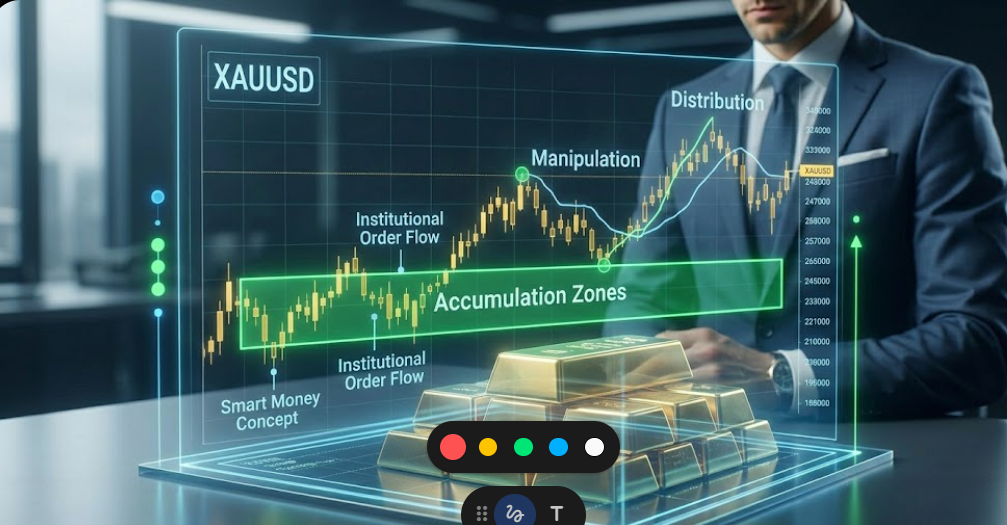
Traders interested in the intersection of price action and decentralized liquidity should explore the Price Action Pro EA. This cloud-based bestseller is specifically designed for Smart Money Concept (SMC) strategies, helping traders identify institutional footprints in both crypto and forex markets.
AI Predictive Models: Improving Trading Results in 2026
The backbone of 2026 financial forecasting lies in advanced computational techniques that analyze sequential and multivariate data with unprecedented precision. AI has moved beyond simple trend-following to provide dynamic scenario planning and real-time risk assessment.
Neural Networks and Financial Forecasting
In 2026, institutions rely on several core neural architectures to navigate unpredictable markets:
- Recurrent Neural Networks (RNNs): Ideal for capturing sequential dependencies in time-series financial data.
- Graph Neural Networks (GNNs): Used to map interconnected assets and market networks for more robust predictions.
- Generative Adversarial Networks (GANs): Employed for synthetic data generation to stress-test strategies against rare "Black Swan" events.
| Model Type | Primary 2026 Use Case | Resulting Performance Improvement |
|---|---|---|
| RNN / LSTM | Time-series trend identification | 15–30% reduction in prediction errors. |
| GNN | Interconnected asset mapping | Better anticipation of systemic ripple effects. |
| Reinforcement Learning | Dynamic portfolio optimization | Short-term returns exceeding 126% in specific sectors. |
| XAI Layers | Regulatory compliance/Transparency | Enhanced auditability and institutional trust. |
These advanced models allow for the continuous adaptation of strategies. If a model detects a persistent shift in the global yield curve, it can automatically adjust hedging strategies to protect capital during a downturn. This level of sophistication is exactly what we offer at(https://investortipster.com/signals/), where we provide real-time, human-verified entries based on our own proprietary AI insights.
The End of Emotional Bias
One of the primary advantages of AI-driven trading in 2026 is the total elimination of human emotional bias—the fear and greed that leads to selling too early or holding too long. AI agents have no "gut feelings"; they have only data. By using AI to vet their portfolios, retail investors can finally close the gap with institutions that have been using these "laser-grid" tools for years.
Comparison of AI Trading Platforms and Subscription Models
The market for AI trading software is vast and tiered, catering to everything from the casual "busy professional" to the technical "chart pattern junkie". Below is a comparison of the leading platforms available in 2026.
| Platform | Best For | Pricing Model (Est. 2026) | Key Advantage |
|---|---|---|---|
| BitsStrategy | Beginners / Passive Income | Tiered / 1% AUM Fee | Fully managed, hands-free system. |
| Trade Ideas | Active Day Traders | $89 – $178/mo | "Holly AI" assistant provides daily high-probability picks. |
| Tickeron | Pattern Seekers | $90 – $145/mo | AI Robots provide specific "Confidence Levels" for every trade. |
| Kavout | Quant Investors | Starts $49/mo | "Kai Score" ranks 10,000+ assets using institutional data. |
| Cryptohopper | Strategy Customizers | $19 – $107/mo | Cloud-based solution with a robust strategy marketplace. |
| Pionex | Mobile Traders | 0.05% Trading Fee | Integrated exchange bots with zero latency and voice prompts. |
| Danelfin | Long-term Traders | Free to $70/mo | Explainable AI (XAI) that details the "why" behind every score. |
When choosing a platform, it is essential to align the tool with your specific trader profile. The "Active Enthusiast" will find the most value in 3Commas or Pionex, while the "Working Professional" seeking passive growth should look toward managed solutions like AlgosOne or our own AI Bot ecosystem.
For those who wish to build their own systems, our(https://investortipster.com/ea-robots/) and(https://investortipster.com/tools/) provide the indicators and scripts necessary to automate MT4 and MT5 strategies. To ensure these systems run 24/7 without interruption, we highly recommend our optimized(https://investortipster.com/vps/), designed specifically for high-speed trading execution.
Infrastructure: The Physical Layer of 2026 Trading
The sheer scale of the infrastructure necessary for AI data centers has made "power" the new "capital" in 2026. Access to the utility grid and high-performance matching engines has become a primary bottleneck for high-frequency trading.
Quantum-Enhanced Computing
While still in the early commercial stages, quantum computing is emerging as a major disruptor. By exponentially increasing processing speeds, quantum algorithms can solve complex portfolio rebalancing and arbitrage detection problems in fractions of a second. Leading institutions are already experimenting with hybrid quantum-classical models to reduce execution latency to absolute minimums.
API-First and Cloud-Native Environments
Modern trading infrastructures have shifted toward open architecture and cloud-native platforms. This enables seamless integration between brokers, data providers, and strategy developers. By adopting API-first frameworks, firms can adapt rapidly to new instruments or regulatory changes. For the independent trader, this means that having a secure, cloud-based copy solution is essential. Our(https://investortipster.com/cloud-copy-trading/) platform allows you to copy trades from master accounts without ever sharing sensitive passwords.
Massive FAQ Section: The Image Decoder
The following FAQ provides direct, high-value answers to the most common queries from the 2026 keyword wheel.
Which AI trading platforms provide real-time data?
Platforms such as Trade Ideas, Tickeron, and TrendSpider are industry leaders in providing real-time data feeds and market scanning. For crypto specifically, Pionex and BitsStrategy offer zero-latency execution because their bots are integrated directly into the exchange core.
Where can I find reviews of AI trading software?
Expert ratings and independent reviews for 2026 AI platforms can be found on professional finance portals like Liquidity Finder, Benzinga, and WallStreetZen. Additionally, Koinly and Investortipster.com provide specialized reviews for crypto-focused AI tools.
What are the top AI tools for automated crypto trading?
As of 2026, the most reliable tools include 3Commas for advanced customization, Cryptohopper for its strategy marketplace, and BitsStrategy for full automation. For novice traders, MoneyFlare and Pionex offer simple, user-friendly "one-click" solutions to enter the market.
What are the leading AI platforms revolutionizing trading today?
Revolutionary platforms in 2026 include Kavout for its deep-learning "Kai Score," AlgosOne for generative risk management, and our own(https://investortipster.com/marketplace/product/ai-trading/) which maintains a dominant 83%+ win rate in the Gold markets. Trade Ideas also remains a cornerstone for day traders seeking "Holly AI" generated setups.
What is the future of AI trading in 2025 and 2026?
The future is defined by "Agentic Markets," where AI doesn't just suggest trades but executes them autonomously as part of a multi-agent team. We are seeing a shift toward "Invisible DeFi," where the complex back-end of global finance is managed by AI to maximize capital efficiency for the end user. Success will depend on combining human domain expertise with "self-learning" AI models capable of simulating human trader behavior.
How can AI predictive models improve trading results?
AI improves results by analyzing billions of unstructured data points—news, social sentiment, and alternative retail data—to find patterns invisible to human eyes. Models like LSTMs can reduce prediction errors by 15-30% in volatile markets, allowing for more disciplined risk management.
What are the primary advantages of AI-driven trading?
The core advantages are 24/7 market monitoring, the total elimination of emotional bias, lightning-fast execution speed, and the ability to process massive datasets simultaneously. AI also enables "predictive risk," where models can auto-suggest reducing position size before a market shift occurs.
How do I find "hidden gems" in the market using AI?
Tools like AltIndex and Incite AI specialize in tracking "Alternative Data"—such as job postings, brand mentions on TikTok, and credit card transaction data—to find stocks gaining traction before they hit the news cycles.
Conclusion: Securing Your Edge in the AI Era
The 2026 landscape of algorithmic and crypto mastery is one of unprecedented opportunity and complex risk. The transition to autonomous agents and multi-agent systems has democratized institutional-grade tools, but it has also increased the stakes for those who fail to adapt. Success in this era requires more than just a bot; it requires a strategic ecosystem that combines high-performance infrastructure, adaptive AI models, and a continuous learning mindset.
At investortipster.com, we provide the definitive toolkit for the modern trader. Whether you are seeking to master the gold markets with our(https://investortipster.com/marketplace/product/ai-trading/), education yourself through our comprehensive(https://investortipster.com/courses/courses/), or secure your automation with a high-speed(https://investortipster.com/vps/), we have the resources you need to stay ahead.
The markets of 2026 will not wait for human reaction. Secure your competitive edge today by joining the(https://investortipster.com/) community. Access the future of trading tools today and begin your journey toward algorithmic and crypto mastery.